PRIVATE LOCAL MULTIMODAL

Private AI,
human presence.

An offline AI-powered digital human for education and research—combining local intelligence, natural voice interaction and institution-controlled knowledge.
100% LocalProcessing stays on institutional infrastructure.
Private by DesignInstitutional data, policies and control.
Built to ScaleFrom a research prototype to shared use.
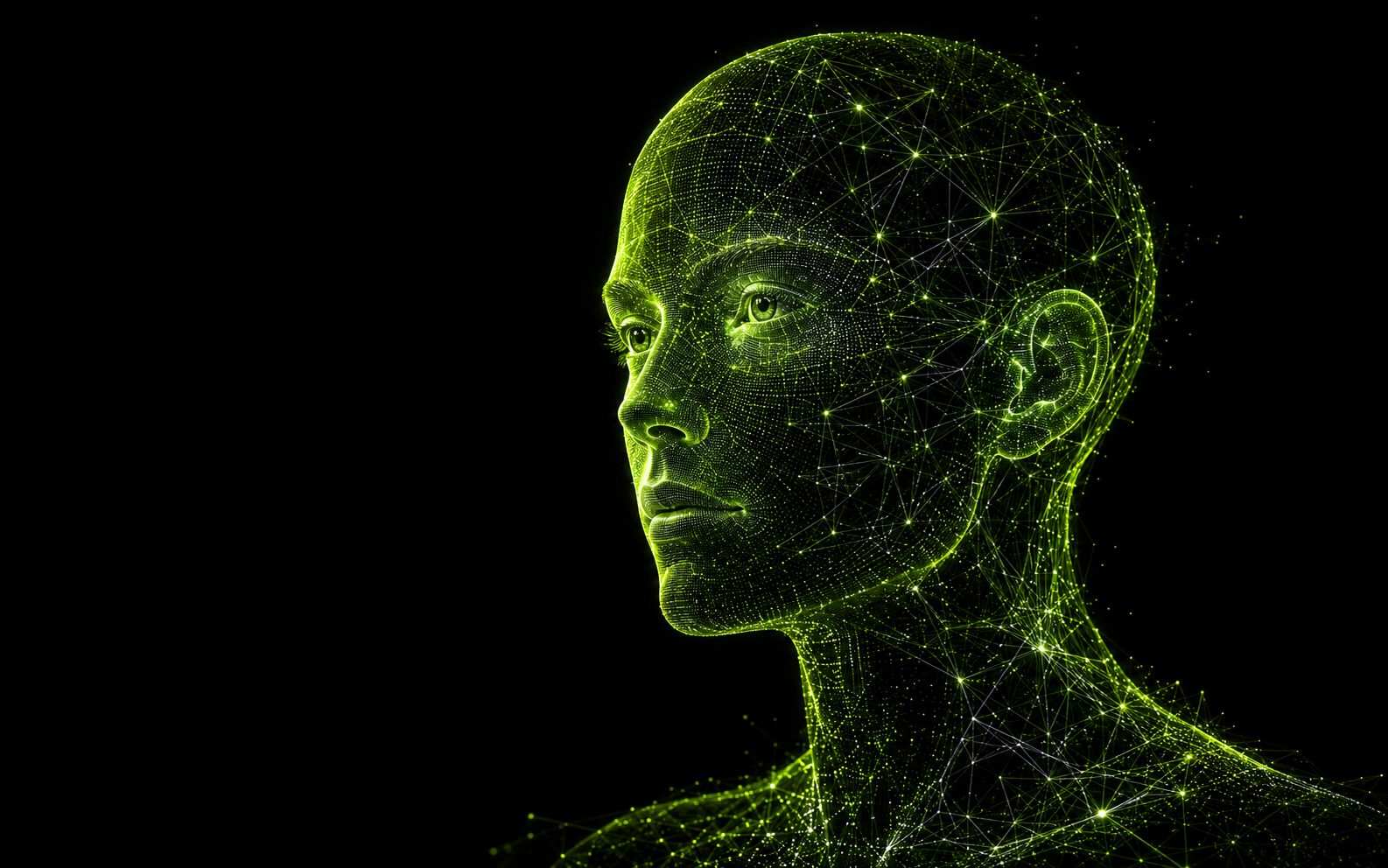
Luminous digital human formed from green data points
LOCAL INFERENCELLM · RAG · MULTIMODALInstitution controlled
VOICE PIPELINEASR · NLU · TTSNatural, low-latency dialogue
DIGITAL HUMANREAL-TIME PRESENCEContext-aware interaction

THE SYSTEM

One private intelligence layer.
Many human experiences.

MetaHuman is the independent research system. Hardware and display technologies are evaluated as components—not presented as project partners.

01

Local intelligence

LLM, RAG and multimodal reasoning run within institution-controlled infrastructure.

02

Natural interaction

Speech recognition, conversational AI and voice synthesis support fluid dialogue.

03

Digital human

A responsive, human-like interface makes complex material more approachable.

04

Immersive presence

Specialized displays can give the digital human a convincing physical presence.

WHY METAHUMAN

Designed for learning, discovery and trust.

EDU

Education

Course-grounded explanations, guided practice and accessible, multimodal learning support.

R&D

Research

A reproducible platform for human–AI interaction, digital-human and immersive-learning studies.

KNW

Institutional knowledge

Private access to approved policies, archives, research and instructional materials.

PROPOSED ARCHITECTURE

From institutional knowledge to embodied interaction.

TECHNOLOGY EVALUATION

Two different roles.
Two independent discussions.

NVIDIA and Looking Glass are not presented as partners, either with MetaHuman or with each other. Their technologies are being evaluated separately for different layers of the proposed system.

COMPUTE LAYERDISCUSSION IN PROGRESS

NVIDIA

Candidate platform for local AI inference and real-time digital-human workloads.

  • RTX PRO 4500 BlackwellEarly prototype and research workstation candidate
  • RTX PRO 6000 BlackwellPotential scale-up path for larger and concurrent workloads
  • Topics to validateModel size, latency, Unreal rendering, concurrency and total system cost
View NVIDIA questions →
DISPLAY LAYERDISCUSSION IN PROGRESS

Looking Glass

Candidate immersive display for presenting the AI avatar as a physical digital presence.

  • Hololuminescent DisplaysDisplay family proposed by Looking Glass for AI avatar use
  • Integration focusReal-time avatar pipeline, viewing experience, dimensions and deployment
  • Topics to validateContent pipeline, SDK/API, latency, multi-view behavior and cost
View Looking Glass questions →

Important: Company names identify technologies currently under evaluation. No partnership, endorsement, procurement decision or joint solution is implied.

MEETING BRIEF

Questions that move the project forward.

NVIDIA DISCUSSION
  1. Can one workstation run the LLM, RAG, speech and real-time avatar concurrently?
  2. Which model sizes and quantization levels fit the RTX PRO 4500 versus 6000?
  3. What reference architecture and academic support can NVIDIA provide?
  4. What is the recommended prototype-to-campus scaling path?
LOOKING GLASS DISCUSSION
  1. Which HLD size best supports a life-size or classroom AI avatar?
  2. How does Unreal Engine or a real-time rendered character connect to the display?
  3. What latency, format, viewing-angle and content constraints should we test?
  4. Is a pilot, developer support or research collaboration pathway available?

EDUCATION · RESEARCH · TECHNOLOGY COLLABORATION

Start a conversation.

Discuss a demonstration, research collaboration, technology evaluation or future pilot for the MetaHuman Offline AI System.

Email suzan@stevens.edu